

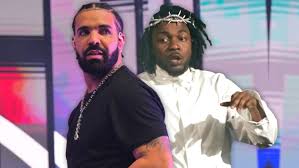
Recording artist Aubrey Drake Graham, professionally known as Drake, has sustained a significant judicial defeat in his federal defamation lawsuit concerning the commercially successful diss track “Not Like Us”, performed by fellow artist Kendrick Lamar.
On Thursday, the United States District Court for the Southern District of New York, presided over by Judge Jeannette A. Vargas, issued a dismissal of Mr. Graham’s complaint against Universal Music Group (UMG), the parent company of his label, Republic Records. The lawsuit, filed in January 2025, alleged that the song Not Like Us defamed the plaintiff by depicting him as a “pedophile” and “sex offender.”
In her written opinion, Judge Vargas held that the statements contained in Not Like Us were not actionable as defamation, determining that “the issue in this case is whether Not Like Us can reasonably be understood to convey as a factual matter that Drake is a pedophile or that he has engaged in sexual relations with minors.” She concluded that, when evaluated in the full context of a rap battle and artistic rivalry, such lyrics constituted “hyperbolic, figurative, and expressive language” rather than verifiable factual assertions.
The court emphasized that Not Like Us must be interpreted in light of the ongoing exchange of diss tracks between Mr. Graham and Mr. Lamar, which had been characterized by escalating rhetorical aggression and artistic posturing. Judge Vargas specifically referenced Drake’s prior track, Taylor Made Freestyle, which featured an AI-generated voice emulating the late rapper 2Pac and included the lyric, “Talk about him likin’ young girls, that’s a gift from me.”
The judge found that Lamar’s response lyric—“Say, Drake, I hear you like ’em young”—constituted a direct rhetorical rebuttal, not a factual allegation. Vargas further stated that Not Like Us “resembles commentary or social media content more than it does journalistic or investigatory speech,” noting that “the average listener does not interpret a diss track as the product of a disinterested, fact-checked investigation conveying verifiable content.”
She described the composition as being “replete with profanity, trash-talking, threats of violence, and hyperbolic language,” all of which are “indicia of opinion rather than factual representation.” On that basis, the court held that reasonable listeners would construe the lyrics as expressive hyperbole, and therefore protected under the First Amendment.
Mr. Graham’s complaint further alleged that UMG had artificially inflated the track’s streaming metrics through inauthentic activity in an effort to enhance its chart performance. However, Judge Vargas dismissed that claim as unsupported by credible evidence, noting that the plaintiff’s submissions consisted primarily of “tweets by individual users and fan reporting,” which she deemed “insufficient to meet the plausibility standard” required under federal pleading rules.
The plaintiff also attributed to Not Like Us a series of alleged security incidents at his Toronto residence, including multiple break-in attempts and a May 2024 shooting involving one of his security guards. The single’s cover artwork, which incorporated a Google Maps aerial image of Mr. Graham’s residence with red location markers resembling sex-offender registry pins, was cited by his legal team as exacerbating the harm.
The court nonetheless found no direct causal link between the song’s release and the criminal incidents.
In a statement to the Daily Mail, a UMG spokesperson characterized the lawsuit as “an affront to all artists and their creative expression,” adding that the company was “pleased with the court’s dismissal and looks forward to continuing to promote Drake’s music and invest in his career.”
Although Mr. Lamar was not named as a defendant in the action, the court’s decision effectively reinforces the broad scope of artistic and expressive protection afforded to performers engaged in musical rivalries and creative disputes.
Following the ruling, representatives for both Mr. Graham and Mr. Lamar declined to comment publicly.
Mr. Graham, who had briefly reduced his U.S. public appearances following the song’s release in May 2024, resumed international touring in 2025, including a February concert series in Australia and a collaborative European tour with PartyNextDoor from July through September. He is currently preparing for the release of his ninth studio album, Iceman, scheduled for late 2025, marking his first major project since the Not Like Us controversy.#newsafro_
